
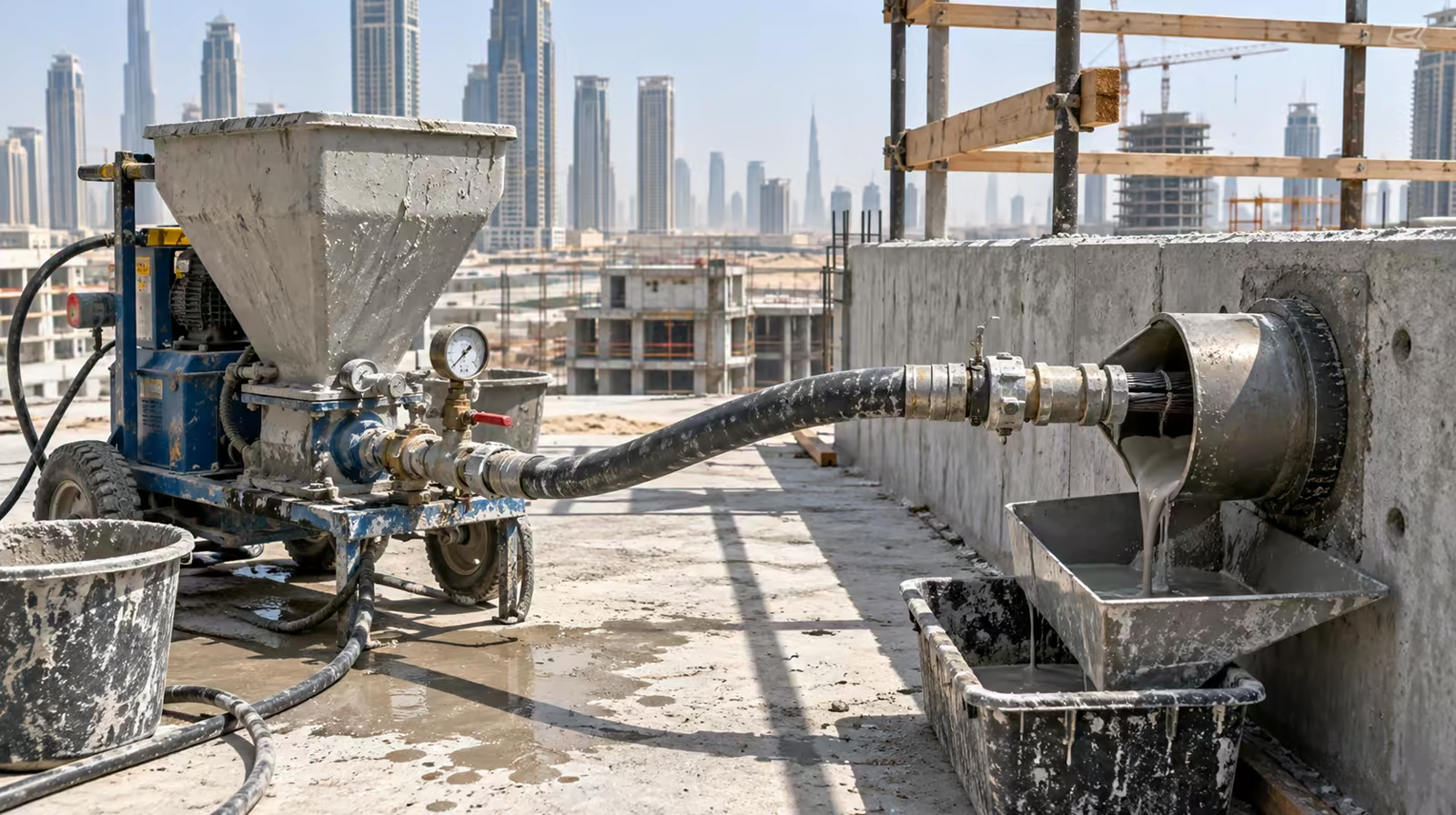
A badly installed tendon can be caught before the pour. A bad stressing reading shows up in the record. A void in a grouted duct sits inside the slab and announces itself decades later, if at all. On grouting works we carry out across the UAE, that is exactly why the operation is treated as protection rather than a finishing task.
What Is the Grout Actually Doing?
Two jobs, and the second is the one that matters over time.
Bonding the tendon to the structure. In a bonded system, once the duct is filled and the grout has hardened, the strand acts together with the surrounding concrete rather than being an independent element anchored only at its ends. That improves how the slab behaves under overload and localises the consequences if a strand is ever damaged. In an unbonded system, damage anywhere along a tendon affects the whole tendon; in a bonded one, the grout limits it.
Protecting the steel. A prestressing strand sits at very high stress for the life of the building. Steel at that stress level is far more vulnerable to corrosion than ordinary reinforcement, and the failure mode is more abrupt. The grout is what stands between the strand and everything that would attack it: moisture, chlorides, carbonation.
The UAE environment makes that protection work harder than it would in a temperate climate. High humidity through much of the year, airborne chlorides along the whole coastal strip where most building happens, and groundwater with high salt content in many areas. Ajman, Sharjah, Umm Al Quwain and Ras Al Khaimah are all coastal emirates, and a building a few kilometres from the Gulf is in a materially more aggressive exposure condition than the same building inland would be. Grouting is the defence against all of it, and it gets one attempt.
That protection is not a coating that can be reapplied. It is placed once, inside a sealed duct, and it is either complete or it is not.
What Does the Grouting Operation Actually Involve?
Preparation. The ducts are checked to confirm they are clear and that the vents are open and correctly placed. Vents matter, because they are how air escapes ahead of the advancing grout and where evidence of a complete fill appears. Anchorages are sealed so grout cannot escape at the ends.
Mixing. The grout is a cement-based mix designed to be fluid enough to travel the full length of a duct without segregating, and stable enough not to bleed water out once it stops moving. Water content is controlled tightly. Adding water on site to make a stiff mix easier to pump is the single most damaging shortcut available on a grouting operation, because it directly produces the bleed and shrinkage that leave voids.
Pumping. Grout is injected at one end and pushed through until it emerges at each vent along the duct and at the far end. The rule is that grout of the same consistency has to appear at the outlet before that vent is closed. Grout appearing thin or watery means what is arriving is bleed water rather than the mix.
Closing off. Vents are sealed in sequence as the grout front passes. The duct is left under a modest pressure so the grout consolidates as it sets rather than slumping away from the top of the duct.
Records. Volumes, mix details, dates, ambient conditions, and grout cube samples for strength testing. Comparing the volume actually pumped against the theoretical duct volume is a simple and effective check that the duct filled.
Why voids form, and why they matter so much
A void is a length of duct where the grout did not reach or where it later receded, leaving the strand bare inside an enclosed space.
They form for identifiable reasons. Bleed water rising to the high points of a draped tendon and later leaving a gap when it is absorbed. Grout that was too fluid and segregated. A duct blockage from concrete intrusion during the pour. Vents in the wrong place, so air had nowhere to go. Interrupted pumping, which lets the grout front stall and set.
What makes a void dangerous is not the missing grout. It is that a void is exactly the environment corrosion needs: enclosed, humid, and with no protection on the steel. A void at a tendon high point, which is over a support where the tendon is closest to the slab surface, is the worst combination of likely and consequential.
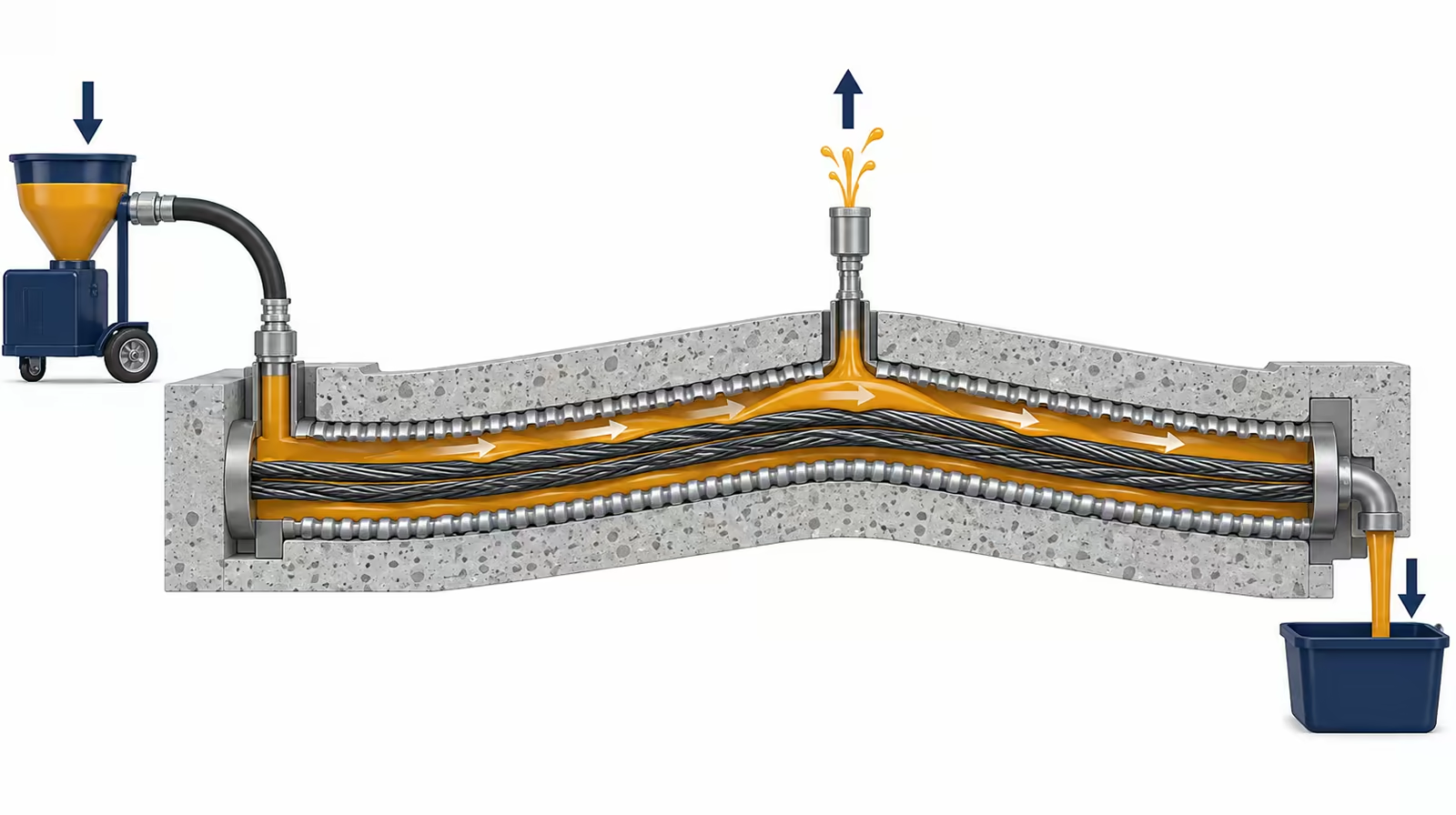
Grout advances along the duct until matching consistency appears at every vent, the evidence a duct has filled completely.
How Do You Know the Grouting Was Done Properly?
Partly from what was recorded at the time, partly from testing afterwards.
At the time, the evidence is the grout record: volumes pumped against theoretical volumes, consistency observed at each vent, cube strengths, and any interruption noted with what was done about it. A grouting record that shows the pumped volume roughly matching the calculated duct volume is meaningful evidence. One that shows no volumes at all is not evidence of anything.
Afterwards, voids can be detected, though not casually. Techniques exist to investigate grouted ducts on an existing structure, and they range from non-destructive methods to drilling small inspection holes into the duct at suspected high points, the kind of work covered under inspection and testing. Any of them is far more expensive and disruptive than doing the grouting properly and recording it, which is the real argument for treating this operation seriously the first time.
What Should You Specify and Insist On?
That grouting is carried out promptly after stressing rather than left open for weeks, because an ungrouted duct is an unprotected tendon and the site is a wet, dusty environment. That the mix is not adjusted on site. That vent positions are set from the tendon profile rather than placed conveniently. That volumes are recorded and compared. That cubes are taken. And that the grouting record forms part of the handover documentation rather than living in a subcontractor's file.
None of this is expensive. All of it is far cheaper than any investigation of a grouted duct after the fact.
On our projects across Ajman and the wider UAE, grouting is contracted as part of the same scope as design, installation and stressing rather than as a separate package. That matters more than it sounds: where grouting is split out to a different party, it is the stage most likely to be squeezed by programme pressure, because by the time it happens the floor already looks finished.
See how this plays out across our post-tensioning work across the UAE.