
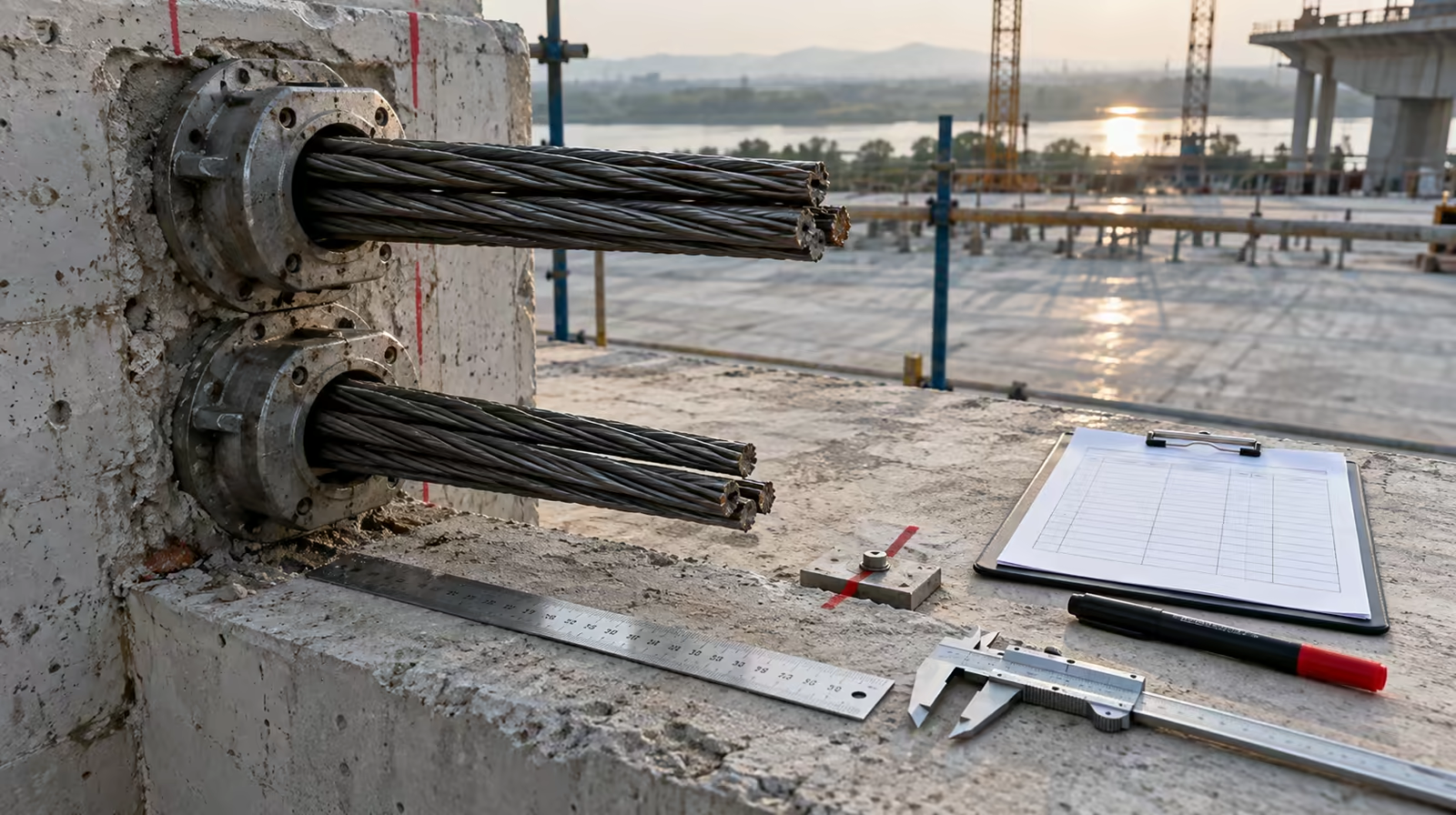
Most of what happens on a concrete frame is verified by looking at it. A post-tensioned floor is different: every tendon produces a measurement that says whether it achieved what the design required. Very few structural operations produce evidence that direct, and on projects across the UAE, how that evidence is kept matters as much as how it was captured.
What Is Actually in a Stressing Record?
Line by line, one row per tendon.
The tendon reference, matching the shop drawings so any row can be traced to a physical location in the slab. The force applied. The calculated elongation, derived from the tendon's length, its profile and the friction expected along it. The measured elongation, taken physically at the jack. And the variance between the two, usually as a percentage.
Around that sit the conditions: the date, the concrete strength achieved at the time of stressing and how it was confirmed, the stressing sequence used, the equipment and its calibration status, and who carried out and witnessed the work.
A record missing the calibration status of the jack is a weaker document than it looks, because the force figures in it rest on an instrument nobody has verified.
What Does the Variance Column Actually Tell You?
It tells you whether the tendon in the ground matches the tendon in the calculation.
Within tolerance, it confirms the tendon was installed to profile, the duct was clear along its length, the friction behaved as assumed, and the force is distributed as designed. That is a considerable amount of information from one number.
Outside tolerance in either direction, it says something diverged, and the direction narrows the cause. Materially less elongation than calculated suggests higher friction than assumed or an obstruction, meaning force is not reaching the far end. Materially more suggests the opposite: less friction than expected, a strand slipping, or an anchorage not gripping.
Neither is automatically a defect. Both are questions that need answering before the floor is built on. The mechanics of that stressing operation are covered in detail on our stressing process guide.
The one pattern worth looking for across the sheet
A single tendon outside tolerance is usually a local issue.
Several tendons in the same area outside tolerance in the same direction is a different signal entirely. That pattern points at something systematic: a profile that was set wrong across a region of the deck, a duct type behaving differently from the friction assumption used, or a calculation input that did not match what was built.
Reading a stressing record row by row will not surface that. Reading it as a whole will, and it is worth whoever reviews it doing so.
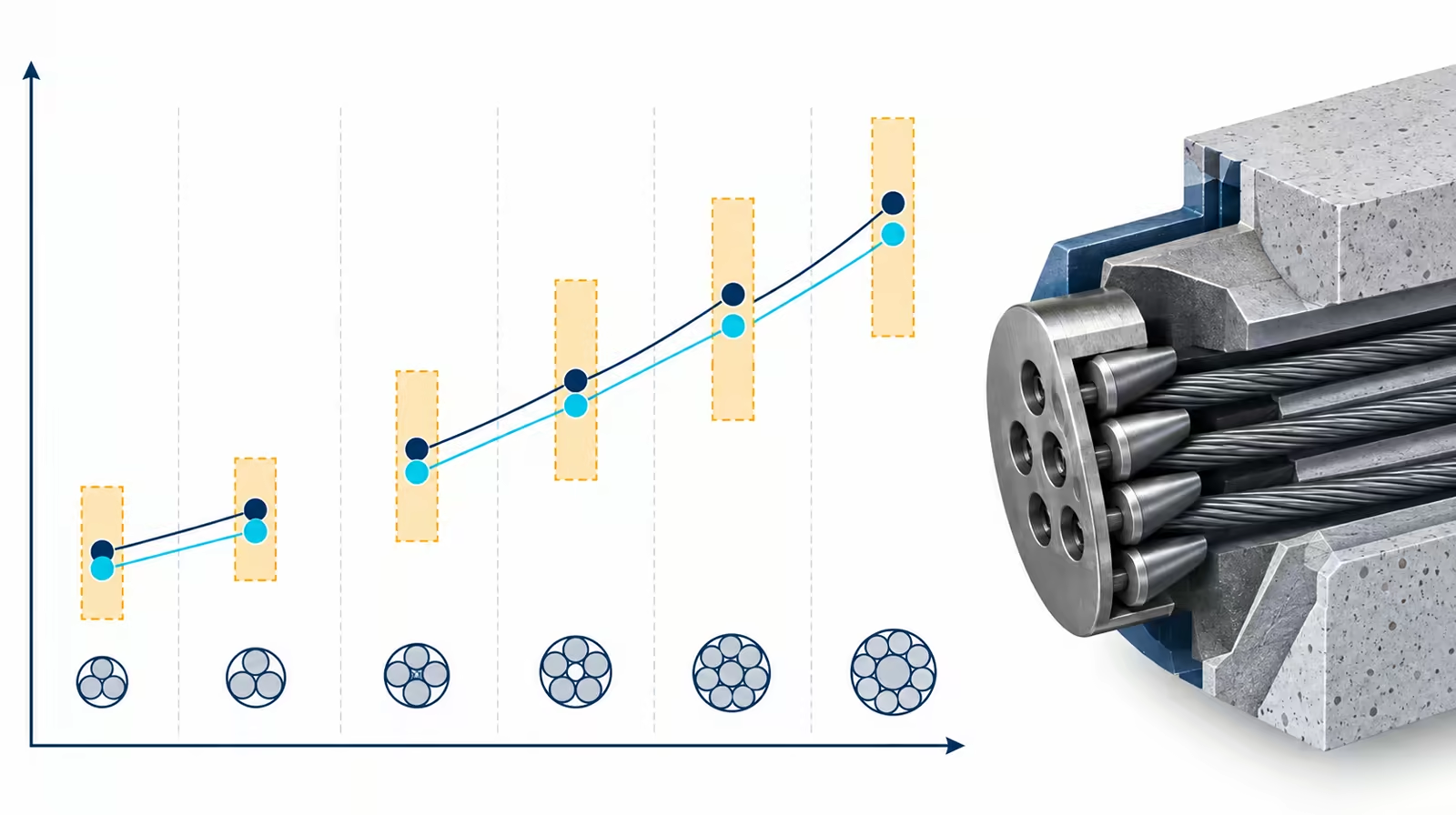
A stressing record, tendon by tendon: force applied, calculated elongation, measured elongation, and the variance between them.
Who Reads This Document, and When?
The consultant, at the time. Stressing is normally a hold point, and the record is what releases the next stage. This is the review that catches problems while they are still cheap to address.
The main contractor, for the programme. The record is what confirms a floor is complete and the cycle can continue.
Whoever investigates the building years later. This is the reader nobody has in mind at the time, and the one the document ultimately serves.
If a post-tensioned floor develops a problem in a decade, the first question is what the floor was built to. Without a stressing record, answering that means investigation through inspection and testing: scanning to locate tendons, opening up to inspect, testing to establish condition. All of it expensive, disruptive and inconclusive compared with a document that already says what every tendon achieved on the day.
Why Records Go Missing, and What It Costs
Rarely through anyone's bad faith. Usually through the ordinary attrition of a construction project.
The work was subcontracted and the subcontractor's records never made it into the main handover file. The floor was stressed under programme pressure and documentation followed later, which sometimes means never. The building changed hands and the technical file did not follow the title.
The cost appears much later. An owner investigating a crack finds no record of the original stressing. A consultant assessing a building for a change of use has no evidence of what the floor was designed or built to carry. A purchaser's technical due diligence turns up a post-tensioned structure with no post-tensioning documentation, which is a finding that affects the transaction.
This is becoming a live issue across the UAE specifically because of how recently much of the building stock was constructed. A large proportion of the post-tensioned buildings in Ajman, Sharjah and Dubai went up within the last two decades, which means the first wave of change-of-use assessments, refurbishments and resales on those structures is happening now. The buildings whose documentation survived are markedly easier to work with than the ones whose did not.
None of that is a structural failure. It is an information failure, and it is entirely preventable at the time for essentially no additional cost.
What Good Practice Looks Like
The record is produced as part of the work rather than on request. It is issued to the consultant at the hold point, not compiled at the end of the project from memory and loose sheets. Out-of-tolerance readings are recorded along with what was found and what was done, rather than quietly re-recorded once they came into range. Jack calibration certificates are attached. And the whole set is handed to the client in a form they will still be able to open and understand in twenty years.
That last point sounds trivial and is not. A structure outlives the software, the file formats and the people. A clear, complete, printed and digital record is what makes the information survive.
On our Ajman projects the elongation record is produced for the consultant as a matter of course, alongside the cube test results confirming the concrete strength at which stressing was carried out, and forms part of the documentation handed over at completion.
See how this plays out across our post-tensioning work across the UAE.