
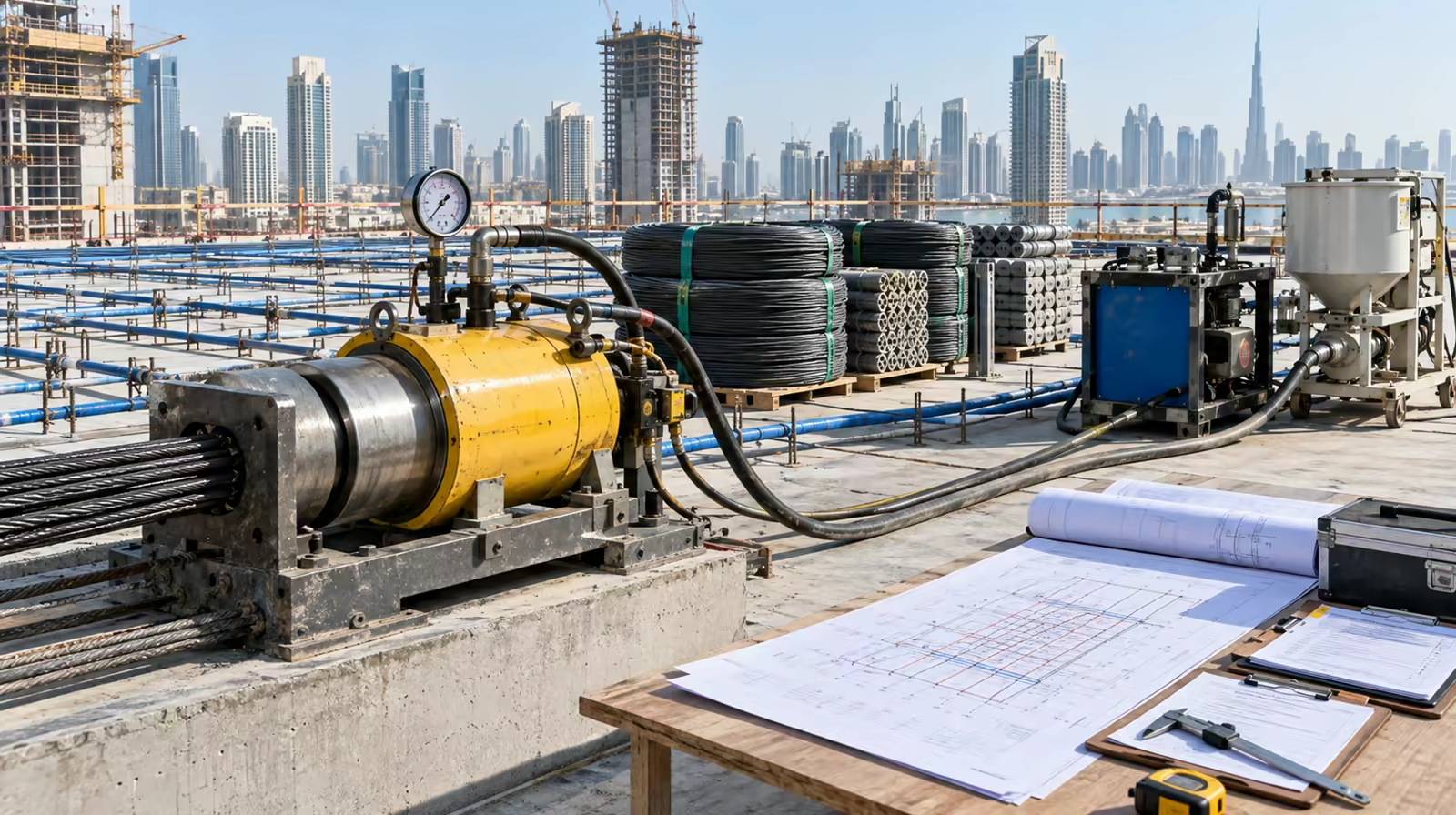
The technique is everywhere across the UAE. The companies that do it as their actual specialism are not. This article is about why, because the reasons are structural rather than accidental.
How Thin Is the Market Actually?
Thin enough that the specialists know each other.
Run the search yourself. Post-tensioning specialists across a country of roughly ten million people, building at the rate this one does, returns a list you could commit to memory. Compare that to any other construction trade. Formwork, reinforcement, blockwork, MEP: each of those has hundreds of established firms.
There is a second layer to the shortage that the search results do not show. Some companies that appear are general concrete or civil contractors who list post-tensioning as one service among many, taking it on occasionally when a project calls for it. That is a legitimate business, but it is a different proposition from a company whose crews do post-tensioning every week, and the distinction matters more than it appears.
Why Is the Barrier to Entry So High?
Four reasons, and each is genuinely difficult rather than merely expensive.
The equipment is specialised and does nothing else. Stressing jacks, pumps, grouting equipment. None of it has an alternative use, so it cannot be justified by a business doing post-tensioning occasionally. It is a committed capital position in one technique.
The engineering capability is not general structural engineering. Post-tensioned design involves load balancing, prestress losses, transfer conditions, restraint from stiff vertical elements and construction-stage analysis. A competent reinforced concrete engineer is not automatically a competent post-tensioning engineer, and the gap takes years of actual project work to close rather than a training course.
The crews take a long time to build. Laying tendons to profile, stressing safely, reading an elongation that looks wrong before the calculation flags it. That is judgement, and judgement comes from repetition. A crew that does post-tensioning a few times a year never accumulates it, which is precisely why occasional providers stay occasional.
The consequences of getting it wrong are severe. This is the barrier that keeps casual entrants out even when they could afford the equipment. A reinforcement error is usually recoverable. A post-tensioning error can be dangerous during the work, invisible after the pour, and structurally significant for the life of the building, the same risk profile discussed in our guide to signs of investigation. Firms understand that, and the ones without genuine capability tend to stay away.
And then there is the demand pattern
Post-tensioning is a small fraction of any project's value but a critical path activity within it.
That is an awkward commercial shape. A main contractor cannot pour the next floor until this one is stressed, so the trade has disproportionate influence over the programme relative to its contract value. That makes it high-responsibility work at modest margin, which is not the profile that attracts new entrants in a hurry.
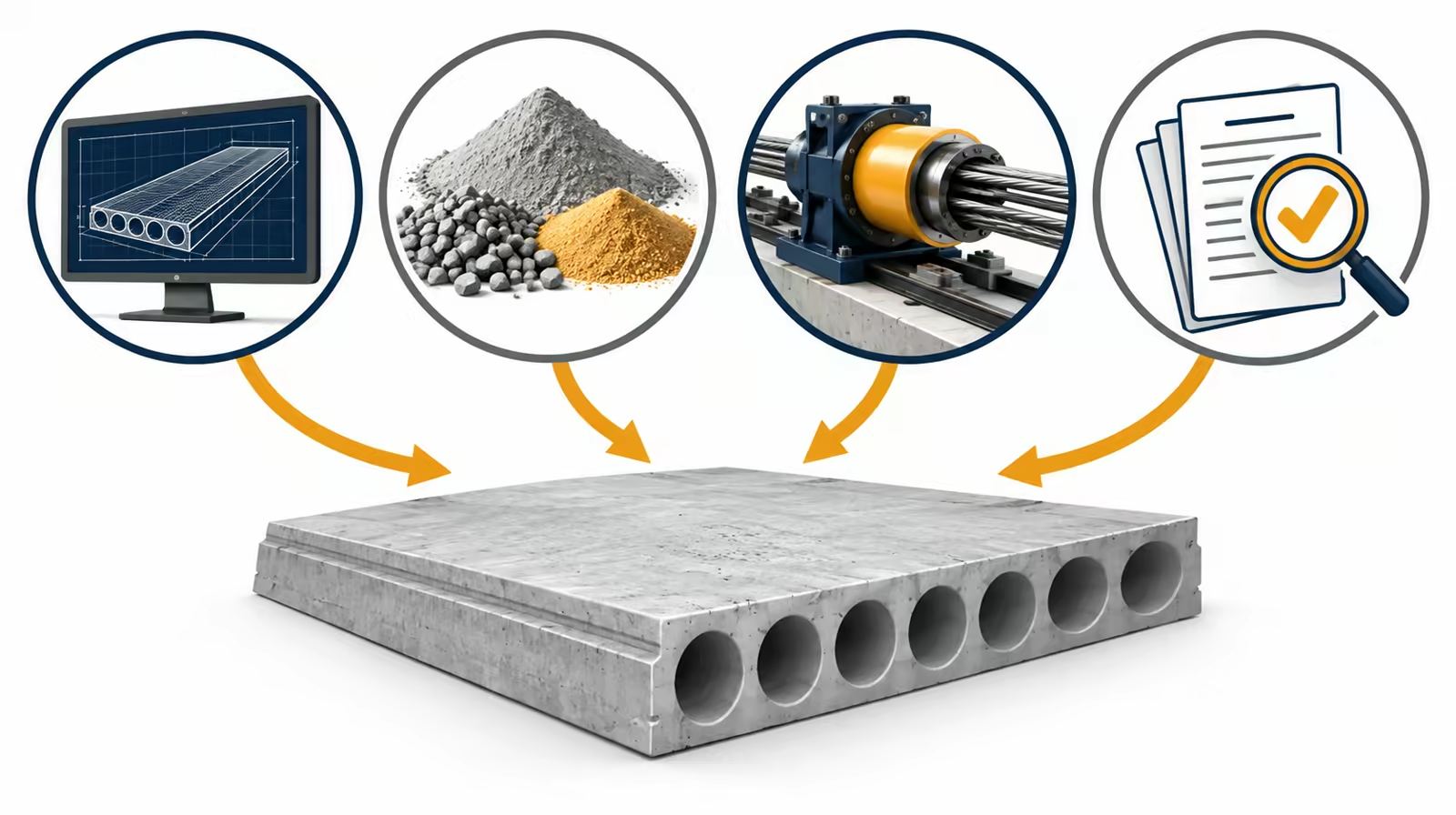
Four barriers that keep the market thin: specialised equipment, specialised engineering, crew experience, and the severity of getting it wrong.
What Does the Shortage Actually Cost Projects?
It shows up as programme, almost always.
A slab sits finished, waiting for a stressing crew that is committed on another site. A consultant cannot release the next pour because elongation records have not arrived. A floor cycle that was planned at seven days runs at ten, and across twenty floors that is two months of programme absorbed by a trade representing a small percentage of the contract.
There is a second cost that is harder to see. Where capacity is scarce, projects take whoever is available rather than whoever is best, and the quality distribution widens. The defects that surface in post-tensioned structures years later are overwhelmingly construction-stage defects, and construction-stage defects correlate with crews doing work they do not do often.
A third cost falls on the design itself. Post-tensioning delivers most of its value when a specialist is involved while the geometry is still moving, because that is when spans, depths and column positions can still change. If specialists are scarce, they get engaged at tender rather than at concept, and the largest savings have already been designed out by the time anyone with the relevant expertise looks at the drawings.
How Do You Compare Post Tension Companies in the UAE?
Given a short list of post tension companies in the UAE, the useful questions are not the obvious ones. Price matters, but it is the last thing to compare, not the first.
How much of the scope do they actually do themselves? Design, materials, installation, stressing, grouting, testing. Every stage subcontracted onward is a handover where responsibility blurs and a problem can sit unowned.
Is post-tensioning their specialism or one of their services? Ask how many post-tensioned projects they completed last year. The answer separates the two categories quickly.
What documentation do they produce as standard? Elongation records, grout volumes, cube results, all issued at the hold points rather than compiled at the end, the kind of practice covered in our guide to elongation records. A company that treats documentation as part of the work rather than an administrative afterthought is telling you something about the rest of its practice.
Will they tell you when post-tensioning is not the right answer? A specialist who has never advised against their own service on a project where it did not suit is either extraordinarily lucky in their enquiries or not being straight with you.
What is their licence actually registered for? Worth checking rather than assuming.
How is the quotation priced? A quotation built from quantities taken off your drawings can be checked line by line. A single rate per square metre cannot, because steel follows spans, loads and deflection limits rather than floor area.
Are the records handed over as the work happens? Elongation readings, grout volumes and cube results should reach the consultant at each hold point, not be compiled at the end of the project.
We built this company specifically to be one of the teams that does post-tensioning continuously rather than occasionally. Since starting operations in 2024 we have completed more than 40 projects and grown to a team of over 50, keeping design, materials, installation, stressing, grouting and testing inside one company rather than subcontracting parts of the sequence onward.
Read more about how we work on our About page, or explore our full range of services across the UAE. If you are ready to appoint, start with our page as a post tension company in the UAE.