
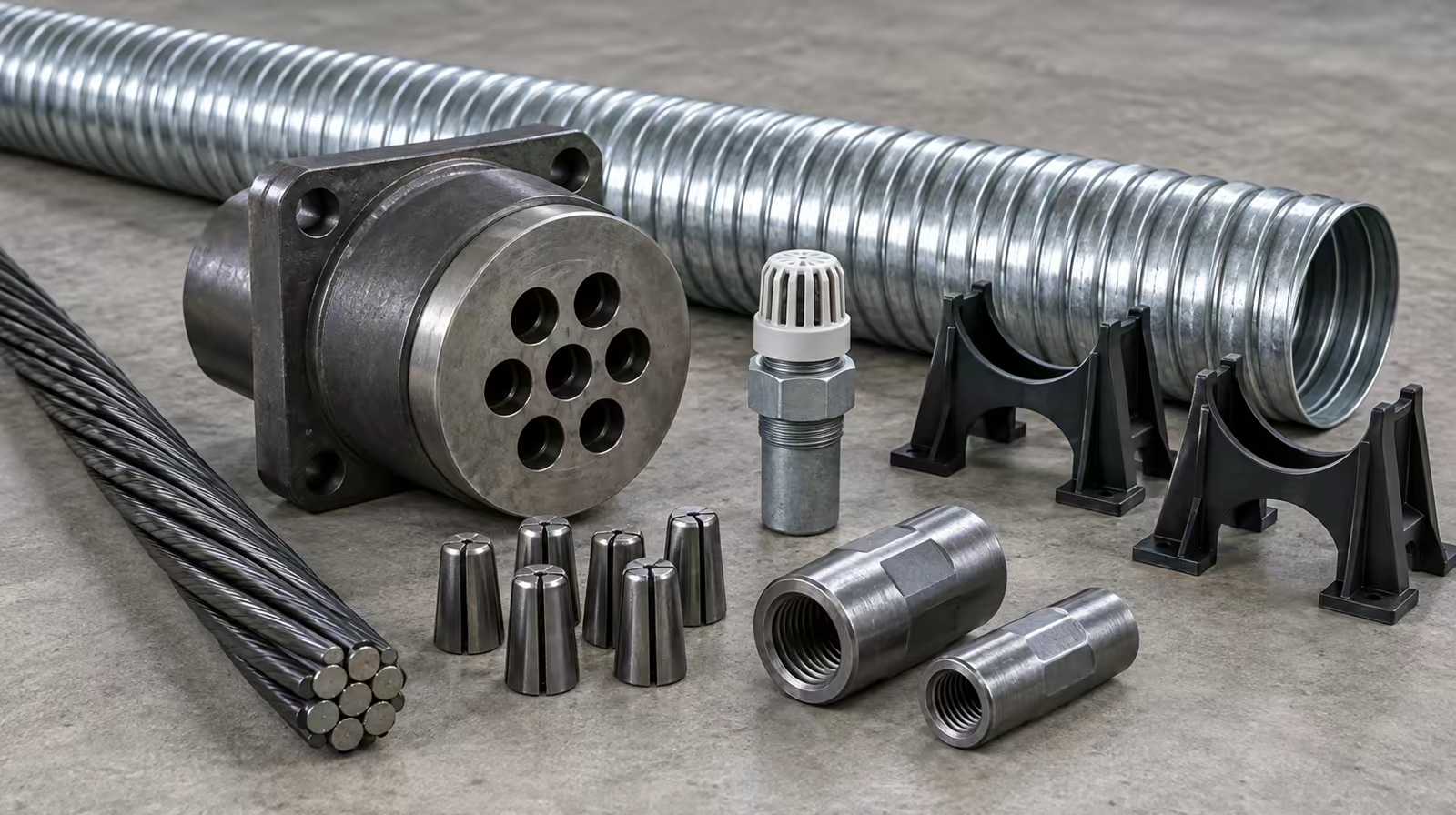
On materials we supply for projects across the UAE, four components carry the whole system: strand, anchorage, duct and grout. Understanding what each is for makes it far easier to understand what can go wrong with a post-tensioned floor.
The Strand: What Is It and Why Is It Different From Rebar?
The tendon is a seven-wire prestressing strand, most commonly 12.7mm in diameter: six wires helically wound around a central seventh.
It is not reinforcement bar. It is a fundamentally different material with a much higher tensile strength, and that strength is the entire reason post-tensioning works. To usefully precompress a slab, the steel has to be stretched a long way and held there. Ordinary reinforcement would yield well before reaching a useful stress, and the prestress would relax away. High tensile strand can be stressed to a high proportion of its capacity and stay there for the life of the structure.
That comes with two consequences.
It cannot be treated like rebar on site. It cannot be bent to fit, welded near, or cut casually. Once it is stressed it stores an enormous amount of energy, which is why exposed strand on an existing structure is treated as a hazard.
It is more vulnerable to corrosion. Steel at very high stress is more susceptible to certain corrosion mechanisms than ordinary reinforcement, and the failure is more abrupt. This is why protection is not a detail but the point.
What to check on delivery: mill certificates matching the specified grade and diameter, and physical condition. Strand should be free of pitting and heavy rust, and stored off the ground and covered. Strand that has been sitting uncovered on a UAE site through a humid season is not the same product that left the mill.
The Anchorage: Where All the Force Ends Up
At each end of a tendon sits an anchorage: a casting bedded into the slab edge, and a set of tapered wedges that grip the strand.
Its job is to take the entire force in the tendon and deliver it into the concrete over a very small area. That makes the anchorage zone the most highly stressed piece of concrete in the whole slab, which is why transfer strength governs when stressing can begin.
Ends are described as live or dead. The live end is where the jack works, left accessible until stressing is complete. The dead end is anchored before the pour and never accessed again.
The wedges are the part that does the holding. When the jack releases, they bite into the strand and lock it. A small, calculated seating movement happens as they do, and the design accounts for it.
What to check on delivery: that anchorages and wedges are the matched components for the strand being used, that castings are undamaged, and that wedges are clean and undamaged with no corrosion on the gripping teeth. Wedges are small, easily mixed up between systems, and a mismatched or damaged wedge is a direct route to a strand slipping at lock-off.
The Duct: The Component Everyone Forgets
The duct is the sheath the strand runs inside, on slabs usually a flat oval section suited to a shallow member.
It does two jobs. Before stressing, it separates the strand from the concrete so the strand can be pulled through it. After stressing, it is the container the grout fills, forming the protection around the tendon.
Its condition matters more than its simplicity suggests. A duct crushed during the pour creates friction that shows up as an out-of-tolerance elongation. A duct split or open at a joint lets grout escape or concrete intrude, and either produces a void. A duct with badly placed vents cannot be fully grouted, because air has nowhere to go ahead of the advancing grout.
What to check on delivery and installation: that duct is undamaged and sound, that joints and connections are properly made and sealed, that it stays clear during the pour, and that vents are positioned from the tendon profile rather than placed conveniently, the same discipline covered in our guide to tendon installation.
The Grout: The Component That Has to Last Longest
The last material into the slab is the one asked to perform for the longest.
Grout is a cement-based mix formulated to be fluid enough to travel the full length of a duct without segregating, and stable enough not to bleed water once it stops. It bonds the strand to the structure and permanently protects it.
Everything else in the list can be inspected before it is buried. The grout is placed inside a sealed duct and cannot be seen at all. This is why the mix specification is not a formality, and why adding water on site to ease pumping is the most damaging shortcut available on a post-tensioning job, a point covered in full in our grouting guide.
What to check: the mix specification and that it is followed exactly, cube samples taken for strength testing, and volumes recorded and compared against theoretical duct volumes.
How the Four Fail, Side by Side
The last row is the important one. Three of the four components declare their problems during construction. The fourth does not, which is why the grouting record is the piece of documentation most worth insisting on.
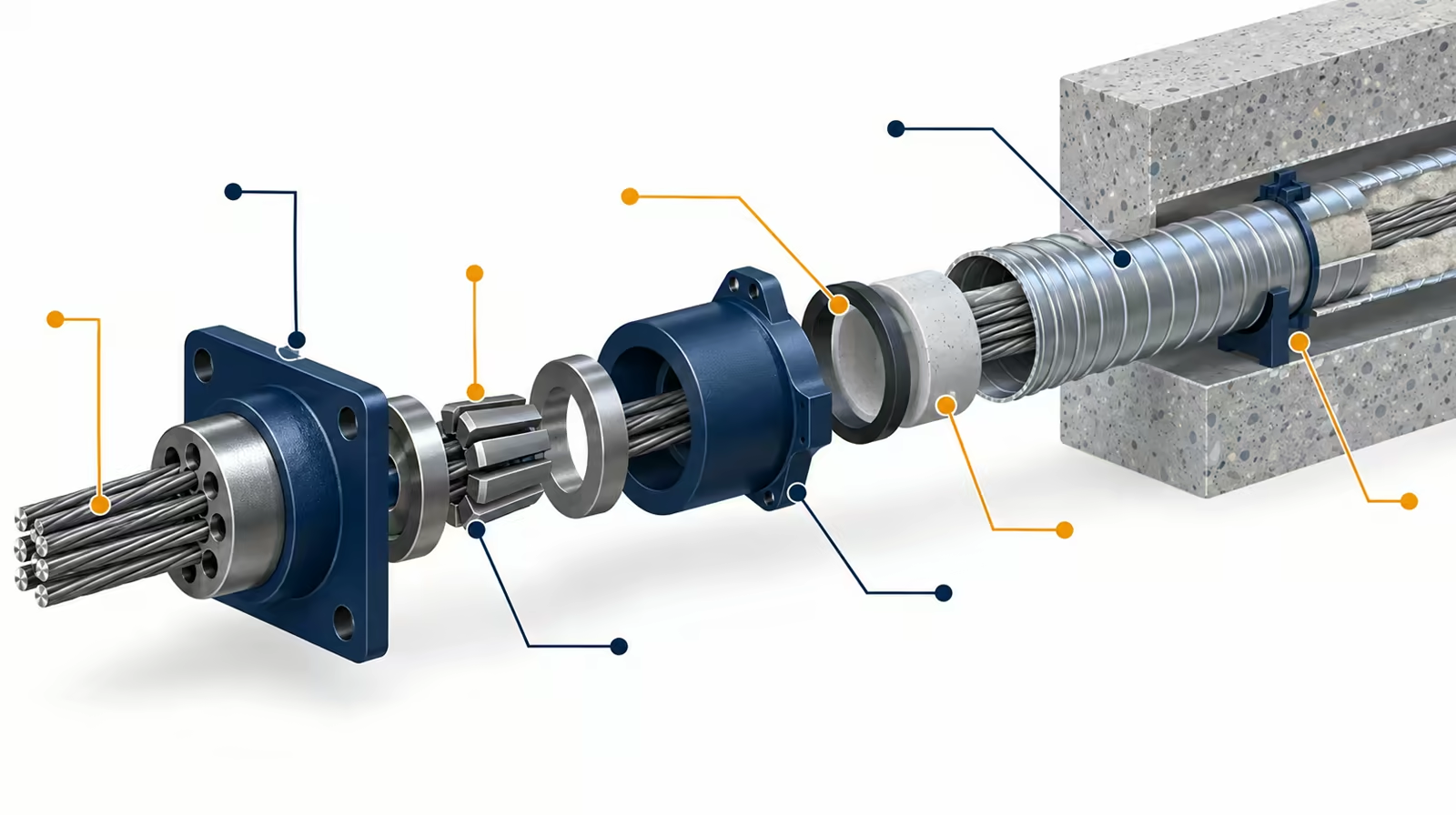
Four components, one system: strand inside a duct, locked at each end by an anchorage, permanently protected by grout.
Why Material Supply and Installation Should Not Be Split
These components are a matched system. Wedges belong with their anchorages. Duct dimensions have to suit the strand and the slab depth. The grout has to suit the duct and the pumping distance. The stressing equipment has to match the anchorage.
Where materials are procured separately from the installation, on price alone, mismatches appear on site at the point where they are most expensive to resolve. The deck is laid, the pour is booked, and something does not fit.
Material scheduling also matters more than it appears. Post-tensioning materials are scheduled against the pour, not ordered once the deck is closed. Where supply and installation sit with one party, that scheduling happens as a matter of course rather than as a coordination exercise between two companies with different programmes.
Across our Ajman projects the material specification has consistently been 12.7mm pre-stressing strand with flat slab anchorages and smooth flat duct, in slabs between 220mm and 280mm thick. That combination is standard for mid-rise residential and mixed-use buildings across the emirates, which is one reason material availability rarely becomes the constraint on this type of project.
See how this plays out across our post-tensioning work across the UAE.